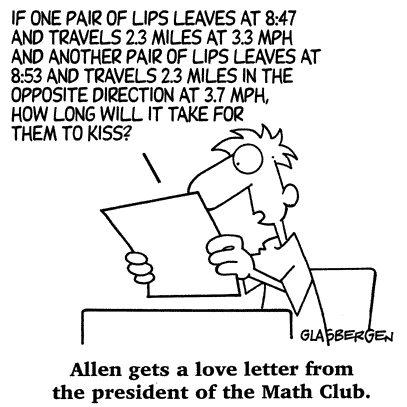
Bear with me on this intro, I promise I’m going somewhere. If you knew me personally you would know that my sense of humour is largely based on referencing early 2000s t.v. shows and hoping so earnestly that whoever I’m talking to knows at all what I’m talking about. There’s this one episode of Ned’s Declassified School Survival Guide where one of the main characters “Cookie” takes a new math class and sort of “edits” the problems his teacher gives him in order to make the problems more interesting and fun. For example, when his teacher asks him to read a problem aloud in class which says something along the lines of “If one train travels north at this speed and another travels southwest at this speed, how far away will the trains be after 1 hour?” Cookie changes the first train into a ware-wolf and the second train into a sea monster.
My point here (I promise there is one), is that I’ve seen through volunteering with Let’s Talk Science the importance of fun in learning science. As I mentioned in previous posts, I became an employee with Let’s Talk Science in Ottawa before starting my CSL placement, and when I went into this placement I honestly questioned how doing LTS outreach could possibly get me course credit in genetics because it really seemed to me like I would be getting credit just for making fun science themed crafts. But to my surprise, despite every LTS activity being focused on providing the kids with a fun science themed experience, each activity is also subtly packed with plenty of learning goals. This post is gonna focus on the genetics related concepts I’ve observed in LTS outreach activities I’ve done in kids, but also how doing these activities has enriched my experience with the course content of my genetics course.
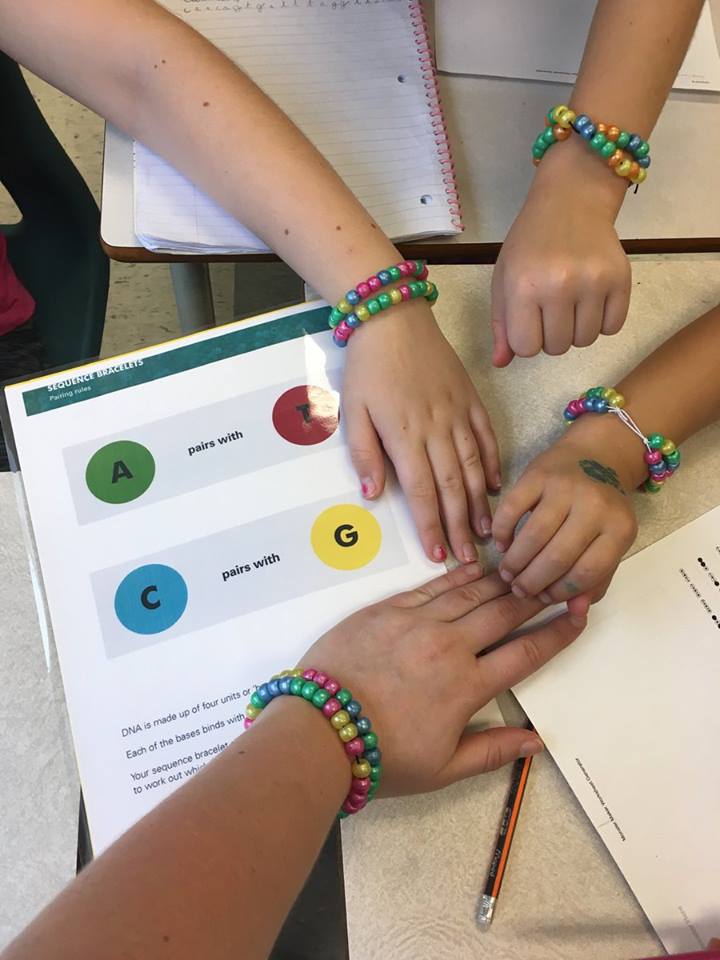
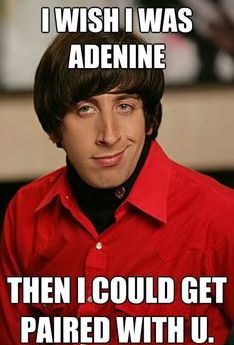
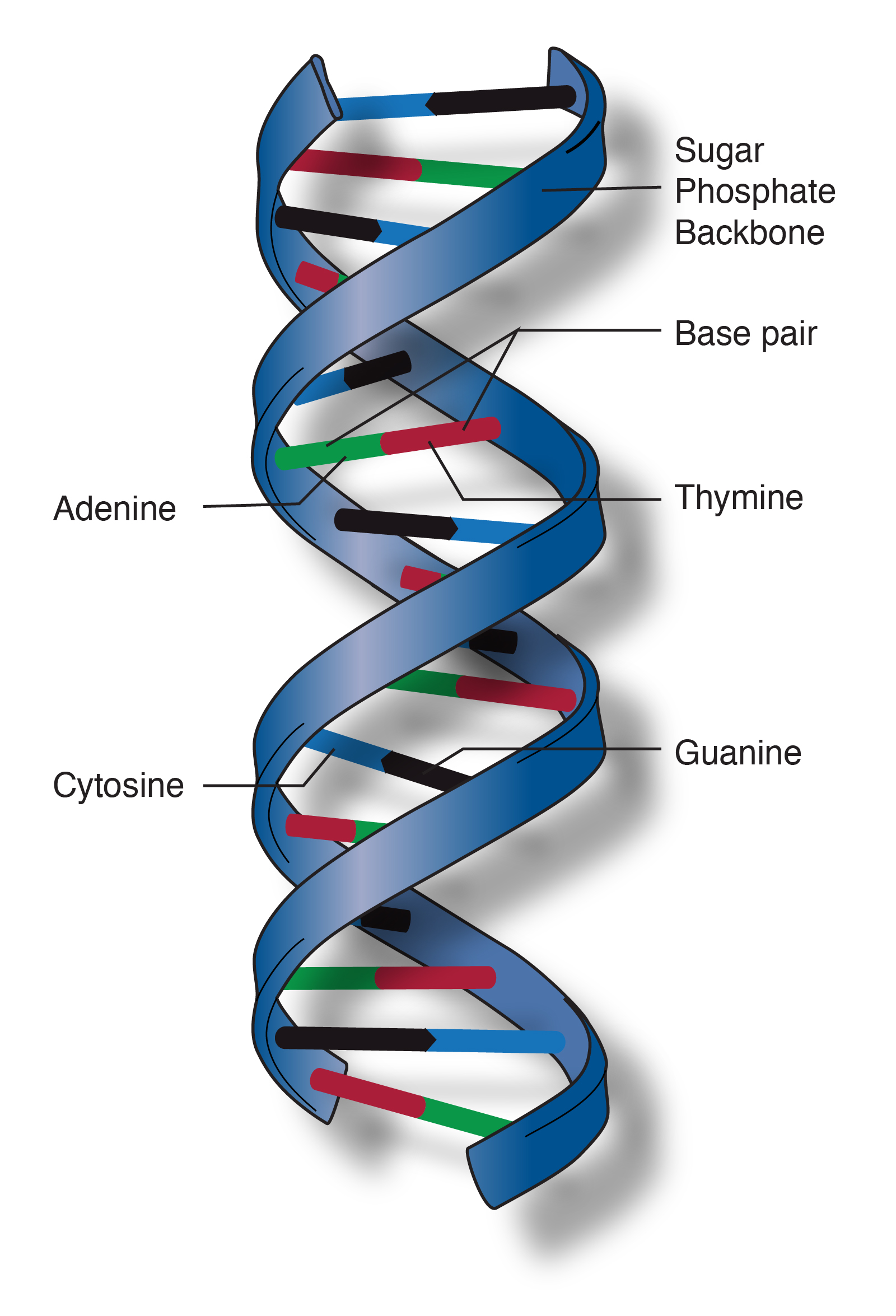
I’ve been able to deliver three different genetics related LTS activities with kids, that being “DNA Bracelets,” “DNA Candy,” and “The Amazing Race.” DNA bracelets is an activity I’ve delivered many times where kids get to make a bracelet based on an example gene. Each of the four nitrogenous bases are represented by a different colour of bead. The problem though as you can see in the photo above is that the kids have to make a bracelet which represents a double stranded molecule of DNA even though we only provide a single sequence of bases. Therefore I have to explain to the kids during this activity the concept of complementary base pairing during DNA replication. Sometimes if I have more than four colours of beads and enough time, I give the kids the option of making a bracelet with one strand of DNA and the complimentary strand of mRNA where a fifth colour of bead represents uracil (C). In this case I’ll have to discuss basic transcription and compare DNA versus RNA which is pretty heavy science for most high schoolers. I know from my own studies as well as my time doing LTS activities that whenever I need to explain a rather complicated scientific concept I need to find some sort of fun and memorable way to present the information so that it sticks, especially as when the kids are younger. I had always struggled to find some way to make complementary base pairing rules memorable to kids until one time I did this activity with a community group and one of the older kids said just as a joke to his friends “I wish I could be adenine so that I could be paired with U.” I found this cheesy joke so funny that if I’m ever delivering this activity I always remember to say this joke, and I’ve never been able to forget the base pairs since then.
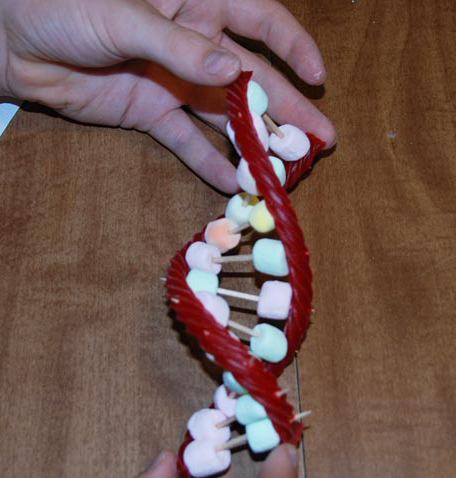
The DNA candy activity is a simple activity catered to younger elementary school kids where the kids get to make a model of a DNA double helix out of Twizzlers, toothpicks, and differently coloured marshmallows. As you can see in the picture below, the Twizzlers represent the sugar phosphate backbone, while the marshmallows represent the paired bases connected together by the toothpick. Along with addressing the concept of complimentary base pairing, this activity also addresses the 3D molecular structure of the DNA double helix, especially because the Twizzlers can be twisted over each other and the whole model can actually look like an accurate double helix with the bases facing inwards. As a visual learner myself, I had never liked looking at diagrams of DNA structures so being able to make one of these candy models myself and being able to hold and manipulate it in my hands has helped me establish a better and more tangible idea of the structure of DNA. For myself as well as the young kids which had probably hadn’t even started learning about cells in school yet, building these candy DNA models made learning the structures within DNA more memorable through fun.
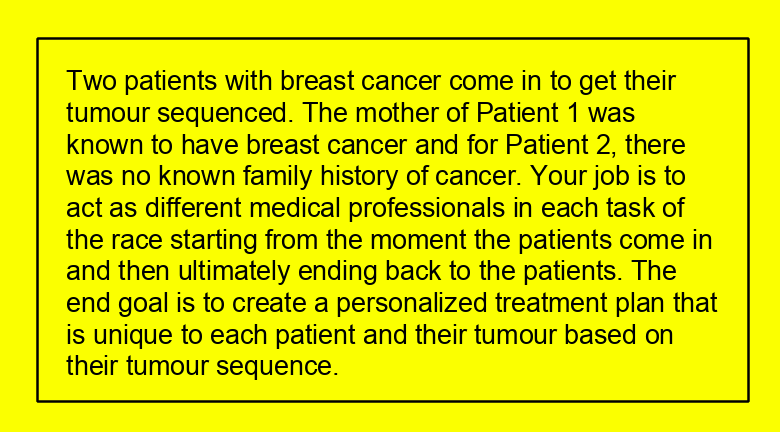
The last activity I’ll talk about is “The Amazing Race” which is an activity I’ve done once which is only done for 11th or 12th graders. It’s a parody of the competition t.v. show of the same name where students are grouped into teams and have to complete different tasks and receive different clues, and the “pit stop” is proposing a drug treatment plan to a fake patient. I find that this activity requires me to apply knowledge that I’ve learned throughout my degree so far and within my genetics course especially when it comes to interpreting and making conclusions based on experimental data. Below is a picture of the overall task which the students are presented with.
All along the way as the activity progresses, I have to act as the judge and dictate whether or not the teams have correctly finished a task and move them to their next clues. This means that I have to actually understand what the students are looking for. Now honesty time, the first and only time so far that I have delivered this activity I would say I wasn’t very prepared. This was the first outreach activity I did as part of my CSL placement so I knew generally what I would be doing and I reviewed the answer key which I would be using to evaluate if teams had completed their tasks, but when it came to the tasks themselves I saw them for the first time when I was with the students (oops!). This means that in order for the activity to go along smoothly and fairly with the class I had to apply my knowledge well. Take for example the first task which requires teams to identify a point mutation and sequence inversion in a sequence from their patient versus a reference sequence. I recall that my answer key only said “point mutation at this nucleotide and inversion from this nucleotide to this nucleotide.” Therefore this first task had me working with the kids to make sure I knew what a point mutation and sequence inversion even was, so I was being tested on my knowledge of the base pairing rules since I had to verify that the students had identified the point mutation by observing which bases were paired incorrectly.
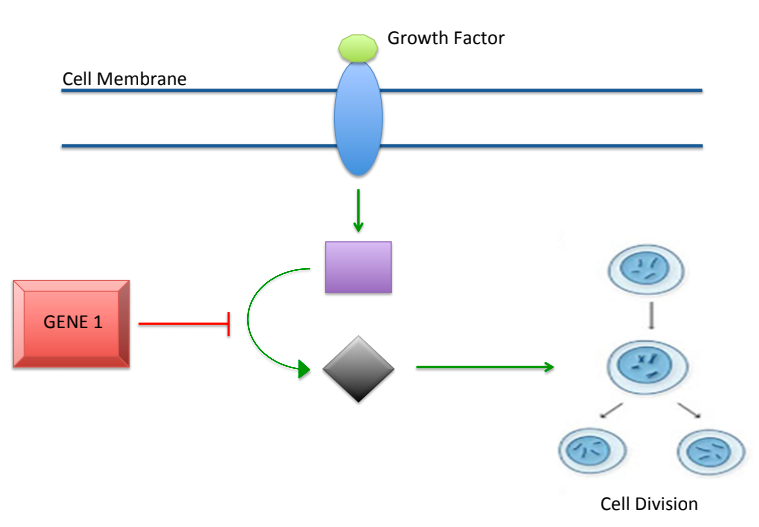
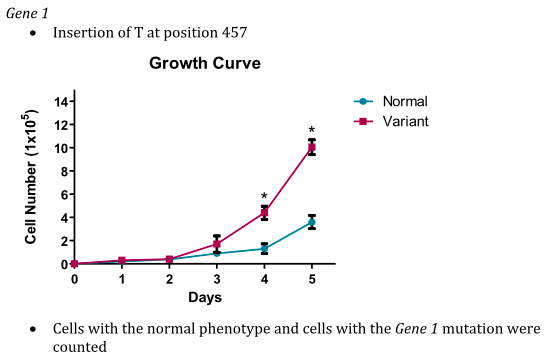
Another task within this activity entails giving the students info cards that describe the effect of different mutations along with test results where the students have to evaluate if certain mutations are present in their patient. For example, what I’ve shown above is the infographic showing what our “Gene 1” does and the data showing the effect of a nucleotide insertion mutation on “Gene 1”. It has to be inferred from the infographic that the gene is responsible for coding for a protein which inhibits a biochemical pathway in cells stimulating cell division, and therefore a mutation in this gene likely causes this function to be lost. This hypothesis has to be confirmed using the data shown on the right which describes that a mutation on this gene does in fact lead to a higher than normal amount of cells. Even writing this down right now and trying to recall these info cards when I was delivering the activity with the students is forcing me to do a bit of mental gymnastics to fully comprehend this hypothesis. When I was actually delivering the activity though right at the beginning of my time in the genetics course, I really had to take the time to think through this process and interpret what the infographic was telling me regarding the function of the gene and what the data was telling me about the effect of the mutation. I remember the stress I had at the time when I had competing high school students trying to complete these tasks as fast as possible to win and I felt like I had to evaluate their answers as quickly as possible but also be certain that I was actualy right in order to keep the competition fair. Additionally, the example I showed above is only one of the gene cards that we give the students out of twelve! I think that it’s safe to say that this activity was a good test of my ability to make accurate but timely conclusions about the functions of different genes as well as the effects of mutations given only experimental results. This concept relates very well to one of the primary objectives of module 3 within the course which was to understand “experimental methods commonly used to analyze gene structure, gene expression, gene function, and genetic variants.” Finally, perhaps the best thing about my experience delivering this activity was that the fun and competitive atmosphere we created trying to replicate the actual Amazing Race show through the activity helped the scientific concepts we addressed stick in my memory up until now.
I’ve been doing LTS outreach activities for almost a year now and getting increasingly more involved in the program over time. Originally I didn’t see very much educational value to the kids I was presenting to and especially myself, because I was mostly focused on the fun of the activities and therefore primarily saw LTS as much more recreational than extracurricular. But through doing different activities which sometimes relate well to my course content, I was able to see that quite a lot of tangible skills and scientific knowledge can be developed in both the students as well as myself in just one hour of an outreach activity that’s always grounded in one thing: fun.
 My CSL Placement with Let's Talk Science